From the water channel beneath the house to the whitewashed villages along the valley, this is a landscape built by centuries of careful, patient craft.
How the mill worked
Water, once, did all the work here — and the sequence still runs beneath the house.
Rural mills like this one were once the backbone of Almería's agricultural economy, built near a watercourse and identifiable by their ditch and their cárcavo — the vaulted chamber where the water-wheel turned. The Molino de Guevara's mechanism, of Arab-era origin, survives in four distinct stages:
01 · Irrigation ditchAcequia
Stone-walled channel of Arab origin that carries water to the mill, fitted with a spillway to control flow and a wooden grate to keep out debris.
02 · The pitCubo
A cylindrical stone shaft roughly a metre wide, where water drops eight metres to gather the force needed to drive the mechanism.
03 · The vaultCárcavo
A half-barrel stone vault beneath the grinding room, 3m wide and 8m long, once entirely flooded while the mill was in operation.
04 · The wheelRodezno
A 1.4m horizontal wooden wheel with radial blades, struck by the pressurised water and still remarkably well preserved today.
Grinding a single sack of grain once took forty-five minutes to an hour, depending on the grain, the stones and the miller's skill. The grinding room itself — now largely the dining room — still shows the pavement line that marked its old entrance hallway. Guests are welcome to visit the cárcavo on request.
Every Saturday & Sunday
Local markets
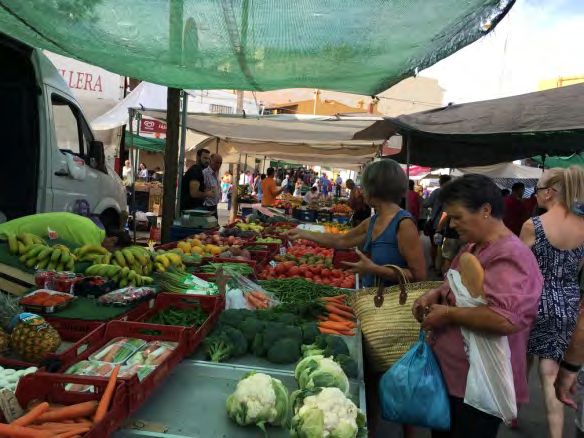
The mercadillos found throughout the Mediterranean are very much alive here, with growers, farmers and artisans selling direct alongside textiles and everyday goods. The Vera market runs on Saturdays; Palomares and Villaricos hold theirs on Sundays — both an easy, unhurried outing.
On the table
Gastronomy
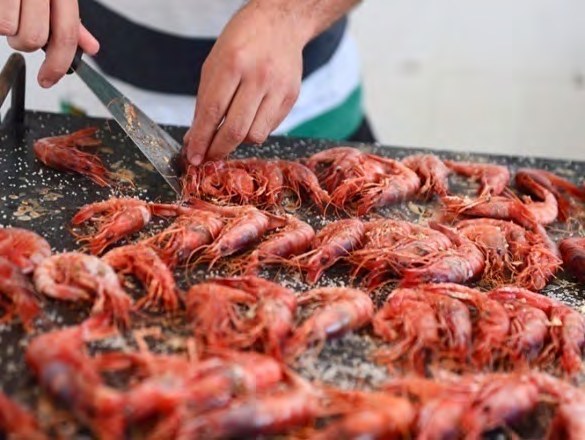
Garrucha's prawns are the region's signature, best had simply grilled. Beachside chiringuitos serve fresh fish and sardinas al espeto, while no table is complete without polvorones de almendra. In Almería city, an evening of tapas — a slice of tortilla, olives, ham, cheese — is a tradition worth keeping.
Living tradition
Handicrafts of the province
Jarapas
Rag-woven textiles once used as blankets, now decorative rugs and throws — famous in Níjar and Las Alpujarras.
Esparto & wicker
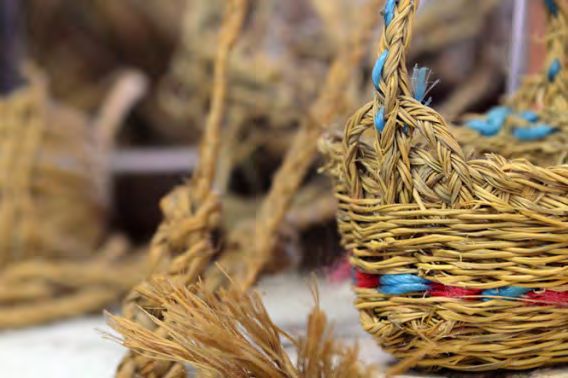
Vegetable-fibre weaving for rope, baskets and espadrilles, one of the region's oldest rural crafts.
Ceramics
Historic pottery traditions endure in Níjar, Sorbas and Albox, home to the protected Las Puntas kilns.
Embossed leather
A craft rooted in Muslim Spain, worked by hand on both faces to raise an ornamental relief.
Worth the drive
Towns, castles and caves nearby
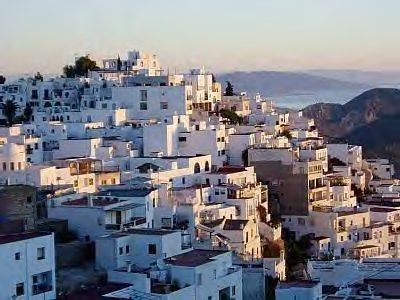
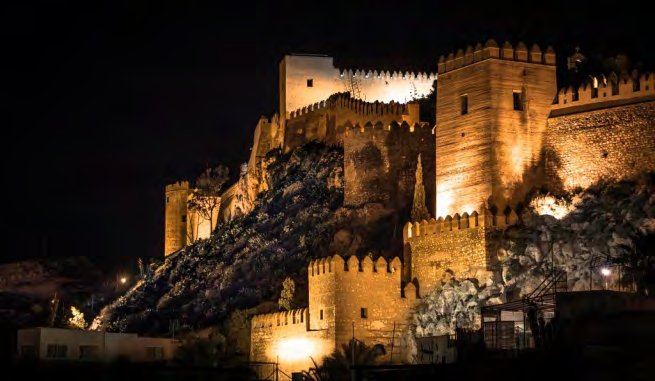
Mojácar, listed among Spain's most beautiful villages.The Alcazaba of Almería, nearly a thousand years old.
Cuevas del Almanzora7 km · the neighbouring town, with the Castle of the Marqués de los Vélez and the Calguerín cave dwellings
Mojácar24 km · a hillside Arab-heritage village, its narrow streets listed among Spain's most beautiful
Almería city80 km · the Alcazaba fortress, the fortified 16th-century cathedral, and the iron Cable Inglés pier
Sorbas45 km · hanging houses over a river gorge, historic potters' kilns, and gypsum karst caves
Region of Los Vélez72 km · pine-forested mountains, the Castillo de los Fajardo, and 7,500-year-old rock art at the Cueva de los Letreros, a UNESCO World Heritage site
Geoda de PulpíThe world's second-largest visitable giant crystal geode, discovered in a former mine near San Juan de los Terreros
Further afield · 2 hours by car
Granada
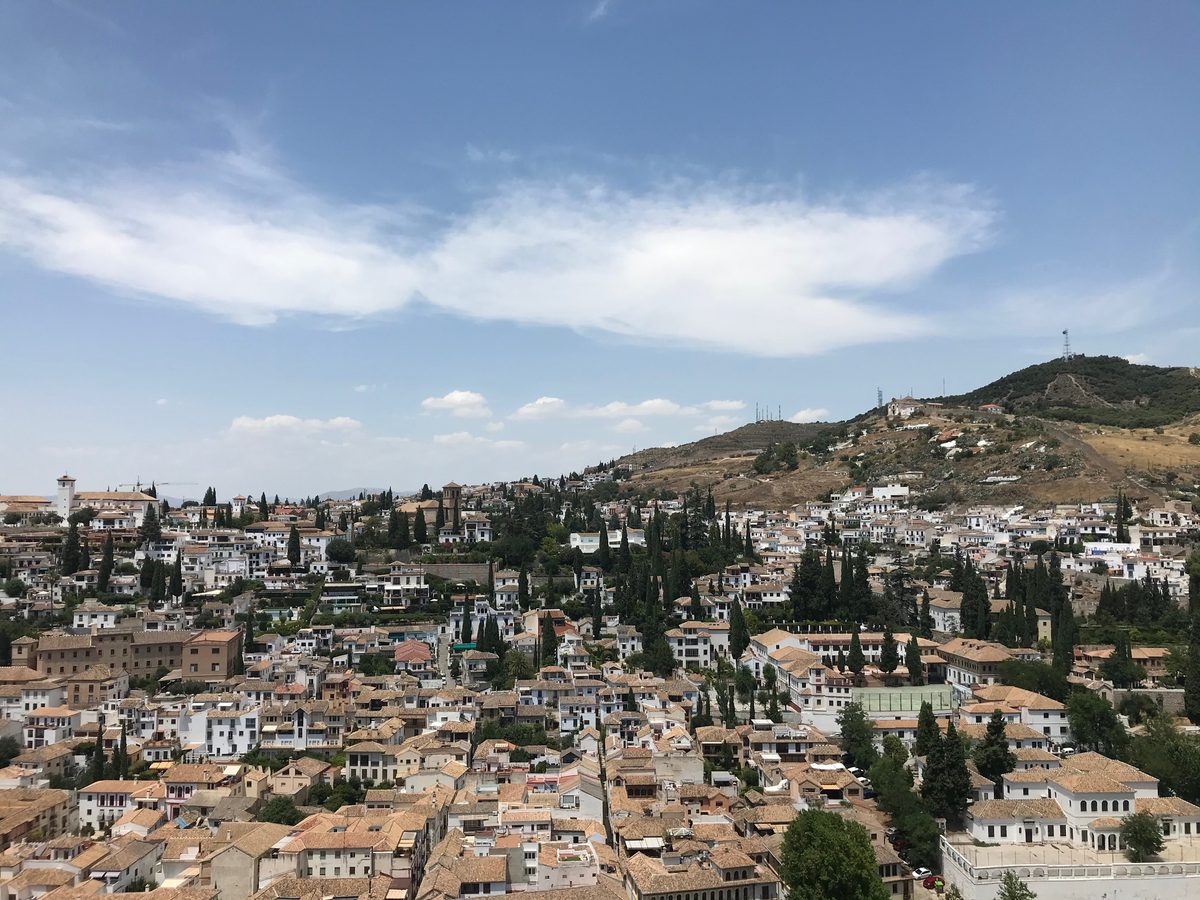
Granada rewards the drive with the Alhambra's Nasrid palaces and gardens, one of the great monuments of Islamic Spain, and a historic old town where flamenco, Moorish architecture and centuries of Andalusian life still shape the streets. It is also one of the few cities in Spain where a drink still comes with a free tapa, making an evening out here as much about the food as the view.
Within reach
Almería and Granada are close enough for an easy day trip, whenever you choose to make one.